Logo: Albert Shanker Institute

Main menu

  • Events
  • Issues Areas
    • Education
      • American Teacher Union History
      • Career and Technical Education
      • Civic Education
      • Early Childhood Education
      • K12 Education
      • School Culture
    • Democracy
      • Civic Education
      • Democracy Web
      • International Democracy
      • Worker Rights
      • Strengthening Democracy
    • Labor
      • American Teacher Union History
      • Healthcare
      • Public Sector Unions
      • Worker Rights
      • Workforce Development/CTE
  • Resources
    • Lesson Plans
    • Publications
    • Supported Work
    • Other Materials
    • Oral Histories
    • Audio Visual
  • Blog
  • About Us
    • About Al Shanker
    • ASI Staff
    • Board of Directors
    • Mission Statement
    • History

Social Media Menu

  • Albert Shanker Institute on Facebook
  • Albert Shanker Institute on YouTube
  • Albert Shanker Institute RSS Feed

Button

  • Donate

May 2024

  • What Two Civil Rights Heroes Can Teach Today's Left

    May 28, 2024 by Richard D. Kahlenberg

    Guest author and Shanker Institute Board Member Richard Kahlenberg reviews Climbing the Rough Side of the Mountain: The Extraordinary Story of Love, Civil Rights, and Labor Activism, the memoir of civil and labor rights leaders Norman and Velma Hill.
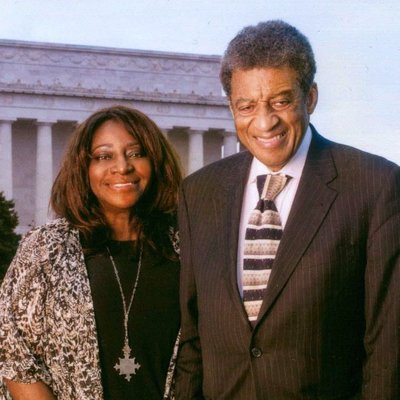
    If you’re worried about threats to liberal democracy in America, emanating primarily from Donald Trump but also from parts of the progressive left, a new memoir published by two veteran civil rights activists provides a refreshing reminder that a better path remains open. Climbing the Rough Side of the Mountain: The Extraordinary Story of Love, Civil Rights, and Labor Activism, by Norman and Velma Hill, two black civil rights leaders, provides a fascinating account of their years working closely with Martin Luther King Jr., A. Philip Randolph, and Bayard Rustin to make their country live up to its ideals.

    • Read more about What Two Civil Rights Heroes Can Teach Today's Left
  • Tackling Chronic Absenteeism Is a Crucial Investment in the Future

    May 17, 2024 by Kate Suchomel and Jim Davnie

    Our guest authors are Kate Suchomel, the Lead Development & Communications Officer, and Jim Davnie, Executive Director, of the Minnesota Alliance With Youth.

    This week, Minnesota Alliance With Youth had the opportunity to engage in conversations at the White House around addressing the issue of chronic absenteeism in our schools. At the “Every Day Counts Summit: Addressing Chronic Absenteeism and Increasing Student Engagement," Secretary of Education Miguel Cardona and Domestic Policy Advisor Neera Tanden, along with state Governors and local leaders, highlighted the many efforts to increase student attendance and engagement and help students come to school every day.

    The Alliance was invited to participate and share successes from our AmeriCorps Promise Fellow collaboration with the Check & Connect Student Engagement program in Minneapolis middle and high schools- a long standing collaboration that has resulted in significant attendance gains for Minneapolis students (the results of which are highlighted as a district-level example in the new Digital Backpack of Resources to Address Chronic Absenteeism in Your Community released by the National Partnership for Student Success).

    Chronic absenteeism has become a critical issue for K-12 schools across the country, and Minnesota is struggling with exceptionally elevated rates in recent years. Statewide data from the U.S. Department of Education indicates a dramatic increase in the percentage of Minnesota schools with high or extreme chronic absenteeism, rising from 34% in 2017/18 to a staggering 71% during the 2021/22 school year.

    • Read more about Tackling Chronic Absenteeism Is a Crucial Investment in the Future
  • How Do Vouchers Defund Public Schools? Four Warnings and One Big Takeaway

    May 15, 2024 by Josh Cowen

    Our guest author is Josh Cowen, Professor of Education Policy at Michigan State University. His new book, The Privateers: How Billionaires Created a Culture War and Sold School Vouchers is forthcoming at Harvard Education Press.

    Over the past two years, school voucher systems and other related schemes that divert taxpayer revenue toward private K-12 tuition have passed state legislatures at unprecedented rates. Although these recent bills became law only, for the most part, in red states, their supporters include a handful of Democrats in other parts of the country as well. And all of this comes despite a decade of evidence that vouchers have led to some of the steepest declines in student achievement on record.

    Regardless of which side of an otherwise ideological or political divide voucher advocates hail from, a common talking point for both is that voucher-like systems leave public school funding unaffected. 

    Such claims rely on a variety of funding strategies that include drawing resources to pay for vouchers from states’ general fund commitments outside of their school aid budgets, and the use of tax credits to make expenditures rather than direct appropriation. 

    • Read more about How Do Vouchers Defund Public Schools? Four Warnings and One Big Takeaway
  • Teacher Appreciation: The Center for Research on Expanding Educational Opportunity (CREEO) Connects Equity and Justice to Education Policy and Practice

    May 8, 2024 by Melika Jalili MPH

    Our guest author is Melika Jalili, program manager at the Center for Research on Expanding Educational Opportunity (CREEO), UC Berkeley.

    Whether it is a focus on the teacher shortage, a discussion of our public schools, or Teacher Appreciation Week, it seems everyone agrees that teachers deserve more respect and recognition. Making that recognition meaningful, by supporting educators to be the teachers they have always dreamed they could be, should be a priority for all of us.

    Cue in, Dr. Travis J. Bristol, Associate Professor at the UC Berkeley School of Education, who announced the exciting launch of the Center for Research on Expanding Educational Opportunity (CREEO) at UC Berkeley last month.

    • Read more about Teacher Appreciation: The Center for Research on Expanding Educational Opportunity (CREEO) Connects Equity and Justice to Education Policy and Practice
  • Reading Science: Staying the Course Amidst the Noise

    May 7, 2024 by Esther Quintero

    Critical perspectives on the Science of Reading (SoR) have always been present and are justifiably part of the ongoing discourse. At the Shanker Institute, we have been constructively critical, maintaining that reading reforms are not a silver bullet and that aspects of SoR, such as the role of knowledge-building and of infrastructure in reading improvement, need to be better understood and integrated into our discourse, policies, and practices. These contributions can strengthen the movement, bringing us closer to better teaching and learning. However, I worry that other forms of criticism may ultimately divert us from these goals and lead us astray.

    At the annual conference of the American Educational Research Association (AERA), the largest research conference in the field of education, I witnessed the spread of serious misinformation about reading research and related reforms. In this post, I aim to address four particularly troubling ideas I encountered. For each, I will not only provide factual corrections but also contextual clarifications, highlighting any bits of truth or valid criticisms that may exist within these misconceptions.

    • Read more about Reading Science: Staying the Course Amidst the Noise
  • Warning Signs: How the Fight for Our Schools is the Fight for Our Lives

    May 2, 2024 by Kristin Penner

    Our guest author is Kristin Penner, a Senior Research Analyst at the African American Policy Forum (AAPF).

    Public education has always been a driver of democracy and anti-racism — that’s why segregationists fought so hard against Brown v. Board of Education and integration in the Civil Rights Era and why the "war on woke" is pursuing a segregation of ideas through bans of books, ideas, and anti-racist instruction. Attacks on democracy and the attacks on racially inclusive and LGBTQ-inclusive teaching, books, and scholarship unfolding across the country today are fruits of the same poisonous tree. The “war on woke” seeks to silence what can be said, what stories we are allowed to know, and whose histories we may share. The so-called “war on woke” is using the power of law and regulations to bully thoughtful educators away from honest teaching of accurate curricula. It aims to erase the very possibility of an inclusive story of our country. It has been highly successful. And we are all at risk. The threat to our ability to teach a fuller history is a threat to our democracy itself. This is not a drill. Our freedom to live in a fully realized multiracial democracy depends on our freedom to learn the full story of who we are, where we have come from, and where we are going.

    • Read more about Warning Signs: How the Fight for Our Schools is the Fight for Our Lives

Search

Share

Recent Blog Posts

  • From the Simple View of Reading to an Integrated View of Foundational Skills
  • When “Success” Leaves Students Behind: How Market-Based Schools Exclude Students with Disabilities
  • What Changed My Mind About How to Teach Reading
  • PTECH is #1
  • When Policy Meets Practice: Why School Mandates Often Miss the Mark

Publications

  • What Would Bayard Rustin Do? by Eric Chenoweth

    Eric Chenoweth is director of the Institute for Democracy in Eastern Europe and principal author of Democracy Web, an online comparative study guide for teachers, students and civic activists. He worked with Bayard Rustin in various capacities in the late 1970s and 1980s.

  • The Adequacy and Fairness of State School Finance Systems (Seventh Edition)

    A national evaluation of the K-12 school finance systems of all 50 states and D.C., published by researchers from the Albert Shanker Institute, University of Miami, and Rutgers Graduate School of Education.

  • Does Money Matter in Education? (Third Edition)

    A comprehensive review of the research about the effect of K-12 school funding on student outcomes.

Blog Archives

  • February 2026 (3)
  • January 2026 (1)
  • December 2025 (4)
  • November 2025 (1)
  • October 2025 (2)

Our Mission

The Albert Shanker Institute, endowed by the American Federation of Teachers and named in honor of its late president, is a nonprofit, nonpartisan organization dedicated to three themes - excellence in public education, unions as advocates for quality, and freedom of association in the public life of democracies. With an independent Board of Directors (composed of educators, business representatives, labor leaders, academics, and public policy analysts), its mission is to generate ideas, foster candid exchanges, and promote constructive policy proposals related to these issues.

This blog offers informal commentary on the research, news, and controversies related to the work of the Institute.

Albert Shanker Institute
555 New Jersey Ave, NW
Washington, DC 20001
202-879-4532

Footer Social Media Menu

  • Albert Shanker Institute on Facebook
  • Albert Shanker Institute on YouTube
  • Albert Shanker Institute RSS Feed

Sign Up for Email Updates

New Footer Menu

  • About Us

2023 Albert Shanker Institute All Rights Reserved