In America and throughout the world, the norms and institutions that provide the foundation of democracy are under assault. Self-government by “we the people” is demanding, requiring a degree of mutual respect, civility and understanding that the Shanker Institute remains committed to fostering. We also believe that citizen engagement, at every level, is both possible and central to rebuilding a strong and vibrant democracy "democracy is achieved or saved when a pro-democratic majority acts with enough unity and purpose to overcome those threats without fracturing." As one of our long-standing priorities, the Albert Shanker Institute is dedicated to research, dialogue, and partnerships that protect and strengthen democracy at home and abroad.
One of the Institute's new featured programs is Educating for Democratic Citizenship which features "Action Civics" lessons and related materials developed by a group of accomplished, experienced educators which we hope will improve teaching and learning of American History, Government, and Civics for teachers and students. This Action Civics approach supports students’ learning about the political process as they identify, research, and take informed action on issues that are important to them. These meaningful learning experiences help young people gain knowledge, develop skills, and grow their motivation for lifelong civic participation. These lessons can be found on a dedicated section of ShareMyLesson.
-
Educating for Democratic Citizenship
The Albert Shanker Institute launched its Educating for Democratic Citizenship Program which features "Action Civics" lessons and related materials developed by a group of accomplished, experienced educators which we hope will improve teaching and learning of American History, Government, and Civics for teachers and students. This Action Civics approach supports students’ learning about the political process as they identify, research, and take informed action on issues that are important to them. These meaningful learning experiences help young people gain knowledge, develop skills, and grow their motivation for lifelong civic participation. These lessons can be found on a dedicated section of ShareMyLesson.
-
March on Washington Resources
The year 2023 marked the 60th anniversary of one of the most historic moments in United States history – the March on Washington for Jobs and Freedom. On August 28, 1963, approximately 250,000 people participated in the march, which is considered to be one of the largest peaceful political rallies for human rights in history.
Hungarian Democracy Defenders: A Report of the AFT/ASI Solidarity Mission to Hungary
In the wake of the Hungarian Election in which the electorate stood against and voted out the authoritarian regime of Viktor Orban, a distinguished delegation of AFT and ASI officers traveled to Hungary to listen and learn first hand about Hungary's political and social transition. This webinar features members of this delegation discussing how the mission informed the work we are currently undertaking to consolidate our own democracy.
AFT/SML/ASI Book Club with Skye Perryman

Skye Perryman joined AFT and ASI President Randi Weingarten for a timely AFT Book Club conversation. Perryman, a constitutional lawyer, TIME100 honoree and Democracy Forward President and CEO, discussed her new book, Ordinary People, Extraordinary Times: How to Reclaim Your Power, Fight for Freedom and Reimagine Democracy.
Building Civic Engagement Through Student-Led High School Voter Registration Drives

Defending Democracy
Democracy is under siege at home and abroad—but history shows that authoritarianism can be stopped, and democracy can be rebuilt through courageous, strategic movements and the actions of everyday people. Thus the Albert Shanker Institute, in partnership with the AFT, launched a series of webinars featuring experts and strategists of resistance and people-powered movements from around the world, exploring how we turn the tide through education, organized labor, and strategic coalition-building.
Defending Democracy: South Africa: The Legacy of Youth Activism in the Fight for Global Democracy
In this the fourth in the series of the AFT/ASI Defending Democracy webinar series we heard from South Africa and U.S. youth who are mobilizing youth movements today while recalling the legacy of those who led 50 years ago. AFT and ASI President Randi Weingarten and Dr. Mugwena Maluleke, General Secretary of the South African Democratic Teachers Union led off the discussion with their reflections on the historic anti-apartheid movement and what it teachers today in our FIGHT FOR A BETTER LIFE FOR ALL.
Defending Democracy: The Hungarian Elections and the Future of Hungarian Democracy
From educators and students to journalists and civil society leaders, activists in Hungary have found the courage to stand up to autocracy and sustain a reform movement. Where democracy is under pressure, the fight to defend it requires understanding how movements are built, how they endure, and what lessons can carry across borders. Watch this post-electoral analysis with three highly regarded political analysts who were on the ground during the election cycle, as part of the third in a series of webinars on Defending Democrats.
AFT/SML/ASI Book Club Conversation with Sharon McMahon
AFT/SML/ASI Book Club A Conversation with Kamala Harris

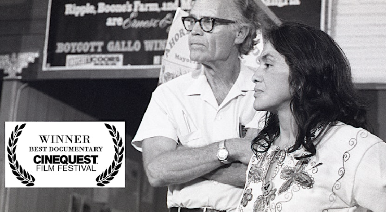
American Agitators Screening
Defending Democracy: The Role of South Korean Labor Unions
This webinar, part of the Albert Shanker Institute’s Defending Democracy series, and in partnership with APALA and AFT’s AAPI Task Force, focused on the role of labor unions in mobilizing protests in response to the South Korean president's martial law declaration; the call for the resignation of the president and the move to elect a new government.
-
Lessons from Hungary and History: People Power is How We Prevail

AFT-ASI President Randi Weingarten (L) and AFT Massachusetts President and Shanker Institute Board Member Jessica Tang (R) examine some of the classroom resources of Hungarian History teacher János Bősze (C).
As a social studies teacher and leader of the AFT’s Resistance Committee, I know we stand to learn a great deal from Hungary – by looking at both its past and present.However, nothing could have prepared me for hearing firsthand what Hungarian union educators, activists and community leaders had to say about their own experiences over the past 16 years and beyond. It galvanized a deeper understanding of both how our democratic backsliding can get much worse, but also how it can be overcome.
As we heard local Hungarians recount their experiences as part of their resistance movement, it was impossible to ignore the eerie and all too familiar undercurrent that accompanied each discussion we had with them. Connecting with our union siblings and democracy activists made it clear that the experience of authoritarianism is global, as are the challenges we face in public education. The similarities between their experiences and what we are seeing as Project 2025 is being implemented throughout the nation became abundantly clear.
-
Voter Suppression Will Not Have the Last Word
Our guest author is Reverend Dr. Cassandra Gould the national political director of the Faith in Action National Network.
Democracy aka governance by the people depends on full and equal civic participation. Free and fair elections are its foundation, ensuring that citizens choose their representatives, not the other way around. At its core, democracy rests on a simple but powerful principle: every vote carries equal weight, regardless of a person’s race, income, education, or social standing.
Yet, for Black Americans, that principle has always been contested.
From Reconstruction to Jim Crow to the present day, Black political participation has been met with coordinated resistance through law, policy, and violence. Yet, it has also been Black political action organizing, strategizing, marching, litigating, and voting that has repeatedly forced this nation closer to its democratic ideals.
-
Equity and Fairness Equals Civic and Business Success
Guest author Stanley S. Litow is a professor at Columbia University, author of Breaking Barriers: How P-TECH Schools Create a Pathway From High School to College to Career and The Challenge for Business and Society: From Risk to Reward, a columnist at Barron's, and an Albert Shanker Institute board member.
Education leaders across the US have been working overtime in response to a range of very serious changes in federal policies that seem to have a consistent goal of undermining what had been long standing commitments to both equity and diversity. Such commitments were designed to reverse a history of discrimination, not just in education, but in a host of segments of American life, including the workplace
Recently one of New York's most iconic headquartered businesses IBM, agreed to pay $17 million to the US Department of Justice (DOJ) to settle a claim that their diversity, equity and inclusion programs were discriminatory and unlawful. While IBM has fully denied engaging in any practices that were discriminatory in any way, some will interpret the payment as an admission of guilt. The DOJ cited that IBM provided diversity training programs, bonuses based on achieving diversity goals, and considered diverse candidates for promotions. There was a time those practices addressing the need for more equity in the workplace were honored, rewarded, and modeled—not penalized. Over more than a century IBM has always prided itself on being a leader in addressing the need for diversity and equity in the workplace, something that was directly connected to long-term bottom-line business success. While IBM is not a perfect employer, a look at IBM’s history speaks volumes about their progress.
-
What Bayard Rustin Would Do? Part 2
Our guest author is Eric Chenoweth, director of the Institute for Democracy in Eastern Europe and principal author of Democracy Web, an online comparative study guide for teachers, students and civic activists. He worked with Bayard Rustin in various capacities in the late 1970s and 1980s. Eric visited the new exhibition at the National Civil Rights Museum in Memphis, Tennessee, “The Life of Bayard Rustin: Speaking Truth to Power,” which shines a light on Rustin’s central work in the Civil Rights Movement and his contributions to the international peace and human rights movements. It runs through February, 2026 and will form the basis of a permanent exhibition in the museum’s expansion planned for 2026. Part 1 of “What Bayard Rustin Would Do” describes the exhibition and the context to Rustin’s work up to 1965. Part 2 describes Rustin’s work and writings in the last 25 years of his life as he faced the increasing backlash to the gains of the Civil Rights Movement. The full article is posted on the Albert Shanker Institute’s March on Washington Resources page.
Introduction
Bayard Rustin was a man of politics and action who devoted his life to organizing and advocacy for greater freedom and democracy in the United States and abroad. Much of that organizing and advocacy was in the form of direct action (he was arrested more than twenty times in acts of civil disobedience), lobbying, and mass protest. Bayard Rustin was also a public intellectual who used the spoken and written word to advance his ideas for democratic change and social and economic justice. While he wrote frequently in his early years of activism for radical publications like Liberation, Rustin wrote more frequently and in more known publications after his organizing of the March on Washington gave him greater prominence. His words were always a guide for action. -
What Would Bayard Rustin Do? Part 1
Our guest author is Eric Chenoweth, director of the Institute for Democracy in Eastern Europe and principal author of Democracy Web, an online comparative study guide for teachers, students and civic activists. He worked with Bayard Rustin in various capacities in the late 1970s and 1980s. Eric visited the new exhibition at the National Civil Rights Museum in Memphis, Tennessee, “The Life of Bayard Rustin: Speaking Truth to Power,” which shines a light on Rustin’s central work in the Civil Rights Movement and his contributions to the international peace and human rights movements. It runs through February 2026, and will form the basis of a permanent exhibition in the museum’s expansion planned for 2026. Part 1 of “What Bayard Rustin Would Do” describes the exhibition and the context to Rustin’s work up to 1965. Part 2 describes Rustin’s work and writings in the last 25 years of his life as he faced the increasing backlash to the gains of the Civil Rights Movement. The full article is posted on the Albert Shanker Institute’s March on Washington Resources page.
We live in a reactionary age. Worldwide, the advance of freedom in the previous century did not just stall. It went into reverse. What is shocking many is that this reactionary age has taken root in the modern world’s oldest, richest and most militarily powerful democracy. Donald Trump’s return to the presidency in January 2025 has put him in a position to assert largely unchecked power to reverse America’s progress towards a multiracial democracy.
This period in America would not have surprised the civil rights leader Bayard Rustin. He spent decades working to end a previous period of white reactionary rule in the United States. Yet, soon after the masterwork of his career — the organizing of the 1963 March on Washington for Jobs and Freedom — he began warning of a political backlash against the gains made to end Jim Crow rule and to make the country a full democracy ensuring the right to vote to all citizens. As he that backlash began to manifest, he argued for political strategies and policies to move the country in a radical direction towards greater equality. Whatever situation he found himself, Rustin worked to achieve a more equal, tolerant and pluralist society and a freer world through nonviolent and democratic means. His life and teachings offer guidance on how to respond to today’s global reactionary challenge. A new museum exhibition offers a launching point.
-
When Educators Confront Authoritarianism
Our guest authors are Adam Fefer, senior researcher at the Horizons Project and a political scientist; and Maria Stephan, co-Leader of the Horizons Project, a member of the Freedom Trainers, and an award-winning author and organizer.
How Educators Strengthen Democracy
Educators are critical to the maintenance of democratic institutions, norms, and freedoms. They provide students with knowledge (e.g., of history and the constitution), skills (critical thinking and media literacy), values (tolerance and civic virtue), and dispositions (to actively participate and deliberate in civic life). Public educators have the great advantage of being embedded in and frequently interacting with their communities, and are typically seen as trustworthy. Public schools are one of the most common places for voting to occur. Apart from educators generally, educators’ unions can strengthen democracy, for example because union members are more likely to vote. When labor unions and professional organizations push for democratic change, these movements tend to have much higher rates of success and long-term sustainability.Democracy is not only strengthened by educators, but academic freedom is itself a component of democracy. Indeed, a free society is incompatible with heavy-handed restrictions on what can be taught, researched, and disseminated, as well as with state control and surveillance of schools and universities. The Varieties of Democracy (V-Dem) project contains more than 10 indices that seek to measure academic freedom across time and place. One example is the “Freedom of academic and cultural expression” index, a scale between 0 (freedoms not respected) and 4 (fully respected). This index documents the following recent declines in the US: from 3.2 to 3.0 between 2016-17, an increase to 3.3 in 2021, then a decline to 2.4 in 2023 and 2.1 in 2024. These coincide with declines on similar indices, like the “Freedom to research and teach” index, as well as with much steeper declines in places as diverse as Brazil, Hungary, and Indonesia.
-
A Dispatch from the Department of People Who Work for a Living
Our guest author is Bernie Burnham, President of the Minnesota AFL-CIO.
Labor Day is upon us, once again, the day set aside to celebrate and honor our labor movement. Our labor movement, where the contributions of working people are recognized as valuable participants in the development and achievements of these United States.
In recent weeks, our AFL-CIO has been on a bus tour traversing the country to remind Americans that “It’s Better in a Union.” Across this nation, union members are standing up and speaking out against the current federal administration and its attacks on labor.
Since he took office, Donald Trump has taken the unprecedented action of illegally cancelling collective bargaining agreements and refusing to recognize workers’ unions at six different federal agencies.
The attacks by this administration on the NLRB (National Labor Relations Board) are outrageous, and we must stand strong as workers and be in solidarity to fight back.
-
The Citizen’s Republic: Power From the People
Our guest author Erica McPheeters works with the Human Rights Campaign as a consultant and social advocate, focusing on equity, LGBTQ+ rights, and community empowerment.
The Great Rejection
Almost two hundred fifty years ago, the original American colonies decided to pursue the right to freedom. Before freedom came the king. This decision has not only changed the trajectory of human governance, but has influenced every aspect of American ideals for almost two hundred fifty years. By denying the proposed divine right of kings and embracing one of the most important concepts of the United States: democracy. This decision embedded certain principles into the legacy of this country. Power derives from the people and cannot be substituted with birthright or conquests. The United States’ shift from a monarchy to a democracy redesigned the future of the entire world while creating a new reality between the government and citizens.
At the inception of our democracy, colonists were not only displeased with a monarchy government, but }"
they were concerned with addressing the greater system that subjected individual citizens to a lack of rights, privileges, and freedoms. Absolute power implies the exclusive role of leaders in making decisions for the masses. Where there is a king, there are only subjects, not citizens. When the thirteen colonies declared independence, it represented the reclamation of all freedoms that humans deserve. They broke away from a deep-rooted history of accepting the inevitable rulership of kings. The Founders of the United States saw something greater for the future of this country. They pictured a republic where power can be held accountable. In this democracy, power is the responsibility of us all. It is now the responsibility of Americans to preserve and protect the democracy the Founders and colonists curated for us.The Path from Subjects to Citizens
The transformation from colonial subjects to democratic citizens was a relentless fight. Through decades of struggle, compromise, and refinement, the United States was able to form and assert our guiding values— life, liberty, and the pursuit of happiness. These democratic ideals forged through historic events included the Boston Tea Party, the Continental Congress, and the fierce revisions of the Constitution. In these critical moments, Americans consistently chose self-governance over a king.
However, democracy requires more than the absence of a king. The framers of the Constitution understood this well and formulated institutional safeguards against the concentration of power. The checks and balances, branches of government, and federalism system creates a division between any individual or group from gaining control of this democracy. In fact, the Bill of Rights aims to ensure these safeguards by protecting individual freedoms from the reach of the government, despite political pressure or opinion.
-
Fighting Back Against Musk’s War on Workers: The Department of People who Work for a Living will Hold DOGE Accountable
Our guest author is Elizabeth "Liz" Shuler, President of the AFL-CIO, the democratic federation of 63 national and international unions that represent more than 15 million working people. She is also a Shanker Institute board member.
A government that works for billionaires will never work for the people. Yet, under the guise of “efficiency,” that’s exactly what’s happening. Elon Musk’s Department of Government Efficiency (DOGE) is gutting Essential public services slashing jobs, undermining the livelihoods of hard working Americans, all while consolidating power in the hands of the ultra-wealthy. This isn’t about making government work better; it’s about making it work for the elite.
-
Diversity Makes America Great
Our guest author is Stanley Litow, a professor at Columbia University; author of Breaking Barriers: How P-TECH Schools Create a Pathway From High School to College to Career and The Challenge for Business and Society: From Risk to Reward; a columnist at Barron's; a Trustee at the State University of New York (SUNY); and a member of the Shanker Institute Board of Directors.
As someone who spent my career in government, business and education, I have become increasingly alarmed at the constant attacks on diversity, equity, and inclusion work.
Diversity finally became a U.S. priority over half a century ago, thanks to Martin Luther King, Jr. and other leaders in the Civil Rights movement when ending race discrimination was made a high U.S. priority. But interest and concern peaked again, after George Floyd's murder, when every sector of the economy pledged to address the critical disadvantages faced by people of color. Floyd's death was at the hands of the police, but his death exposed a problem that was much larger. While some improvements had been made, people of color were clearly under steep structural challenges, far beyond policing. The problem was apparent, in schools, colleges, and all sectors of the economy. In many high schools, data showed screened admission criteria to college prep classes were widespread, depriving many students of color fair access to school programs, like Advanced Placement courses. Data also showed colleges and universities used admissions screening to access their most competitive programs. Data made clear that faculty at all levels were under-represented so far too frequently students of color could not experience teachers or faculty of color, let alone in educational leadership.