• Education Must Be Part Of Our Coronavirus Response

    Our guest author today is Stanley Litow, Professor at Duke and Columbia Universities, where he teaches about the role of corporations in society, and the author of The Challenge for Business and Society: From Risk to Reward. He formerly led Corporate Social Responsibility at IBM, where he was twice selected as CEO of the Year by Corporate Responsibility Magazine.

    Americans are doing their best to cope with coronavirus and the disruption and healthcare emergency it has caused in all of our lives. We are in the midst of a crisis we have not experienced over many generations. The impact on our economy will be cataclysmic, affecting all Americans in all states and territories. Millions of jobs are at risk, along with savings and retirements. But as horrific as this event is (and it is clearly not over), a coordinated response and massive spending from local, state, and federal governments can help to mitigate the disaster and speed recovery. Whether it takes months or years, we will experience a recovery. And while the economic disruption will last for a very long time, the educational disruption is likely to last much longer. A generation of America's children have seen their educations thrown into chaos and we will need a response equal to, and perhaps greater than, what our governments are now doing.

    With little time for preparation or planning, just months before the end of the school year, schools across the nation were abruptly forced to close. While some parents are attempting to continue their children's learning opportunities at home, the vast majority of American children are receiving little to no educational support. School districts across the nation have also started to deliver some hastily produced classes online, but families at the bottom of the economic system often have no access to technology or internet access, making the challenge almost impossible. In addition, most other educational entities have been closed: public libraries, museums, after-school programs, and not-for-profit social services agencies, etc., leaving impoverished families with few viable options, even for public access to online schooling. 

    When our schools reopen, as they ultimately will, and the economic and health crises have begun to improve, our schools will still need a focused, sustained, and elevated national response, and it must have the support of all Americans and every segment of society. The 2020-21 school year will be a test for our nation.

  • A Champion Of Democracy: Clifford B. Janey (1946–2020)

    Our guest author today is Rick Kahlenberg, Director of K-12 Equity and Senior Fellow at the Century Foundation and member of the Shanker Institute Board of Directors. This piece originally appeared on TCF's website, and has been reprinted with the author's permission.

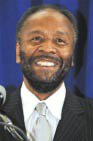
    More than any other school superintendent I have ever met, Clifford B. Janey believed in democracy. While it might be easier to run a school system in a top-down, autocratic fashion, he knew that doing so would send a terrible message to the students who were closely watching how the adults around them behaved. Dr. Janey, who died earlier this month, was the superintendent of schools in Rochester, New York (1995–2002), Washington, D.C. (2004–2007), and Newark, New Jersey (2008–2011); and everywhere he went, he made sure that democracy was at the center of the education that children experienced. 

    Embodying Inclusivity and Equity 

    I came to know Cliff when we served together on the board of the Albert Shanker Institute, a progressive think tank associated with the American Federation of Teachers (AFT). Like Al Shanker, the president of the AFT from 1974 to 1997, Cliff could hardly have a conversation about education without talking about democratic values. In that sense, he was the mirror opposite of his successor in Washington, D.C., Michelle Rhee, who was often autocratic, and who and famously invited a camera crew to film her firing a school official.

  • Interpreting School Finance Measures

    Last week we released the second edition of our annual report, "The Adequacy and Fairness of State School Finance Systems," which presents key findings from the School Finance Indicators Database (SFID). The SFID, released by the Shanker Institute and Rutgers Graduate School of Education (with my colleagues and co-authors Bruce Baker and Mark Weber), is a free collection of sophisticated finance measures that are designed to be accessible to the public. At the SFID website, you can read the summary of our findings, download the full report and datasets, or use our online data visualization tools.

    The long and short of the report is that states vary pretty extensively, but most fund their schools either non-progressively (rich and poor districts receive roughly the same amount of revenue) or regressively (rich districts actually receive more revenue), and that, in the vast majority of states, funding levels are inadequate in all but the most affluent districts (in many cases due to a lack of effort).

    One of the difficulties in producing this annual report is that the our "core" measures upon which we focus (effort, adequacy, and progressivity) are state-level, and it's not easy to get attention for your research report when you basically have 51 different sets of results. One option is assigning states grades, like a school report card. Often, this is perfectly defensible and useful. We decided against it, not only because assigning grades would entail many arbitrary decisions (e.g., where to set the thresholds), but also because assigning grades or ratings would risk obscuring some of the most useful conclusions from our data. Let's take a quick look at an example of how this works.

  • In Memoriam: Clifford B. Janey

    It is with great sadness that we report the death of Clifford Janey, a member of the Albert Shanker Institute’s Board of Directors for 13 years. He was 73 at the time of his death earlier this month.

    Dr. Janey served as a Senior Research Scholar at Boston University, School of Education. Previously, he was a Senior Weismann Fellow at Bank Street College of Education in New York City. From 2008 to 2011, he served as the state district superintendent for Newark Public Schools in NJ. From 2004 to 2007, he served as superintendent of schools for the District of Columbia. And from 1995 to 2002, he served as superintendent of schools in Rochester, NY.

  • Can Bias Prevent Women Running For Office From Having A Fair Shot?

    Our guest authors today are Anthony Carnevale and Nicole Smith. Dr. Carnevale is Director and Research Professor and Nicole Smith is Chief Economist and Research Professor at the Georgetown University Center on Education and the Workforce. This piece was originally published here on CEW's Medium page.

    When the presidential candidates introduced themselves on the Democratic primary debate stage in 2019, they weren’t the usual crowd of contenders. Among more than 20 candidates, six women representing a range of geographic areas and policy positions took the podium. One hailed from California, and another from Minnesota. Some voiced support for Medicare for All, while others opposed it.

    Women have made significant advances in their representation in US politics within the past 50 years. Though Hillary Clinton lost her bid for the presidency in 2016, she won the popular vote and made history as the first woman to be nominated for the presidency by a major party. In 2018, a record number of women ran for Congress — and many won their elections. Although the field of women running for the Democratic presidential nomination has narrowed from six to four, Senator Elizabeth Warren remains a frontrunner in several polls.

    Despite this progress, bias still remains against women in politics. According to our analysis of recent data from the General Social Survey, while this number has fallen over the past 50 years, 13 percent of Americans still believed in 2018 that most women are not as emotionally suited for politics as men. This bias may have the potential to decrease women’s chances of being elected to political office.

  • Making The Case For Multidisciplinary Sex Ed

    Assuming you lived in a state that provided access to sex education, which of your courses would deliver this information? Most sex education is taught in biology or physical health classes with one or two lesson units between middle and high school. One compelling argument that I have found recently is a case to teach sex education in a multidisciplinary approach spanning several years of a student’s education in both social studies and physical science courses. Doing so could drive down teen pregnancy, empower youth about their own sexual health, and change the narratives and misinformation teens receive about sexuality. 

    Leaders in sex education have begun to incorporate lessons on health as early as preschool. Early childhood sexuality education standards from The Future of Sex Ed include discussions on parts of the body, touching, and relationships with family members and friends. Middle school curriculum covers gender, puberty, relationships, and sexual orientation. High school students then receive content on sexual health, contraception, consent, and gender and sexuality. Sustained, age appropriate lessons are crucial to developing healthy teens, and it’s time to rethink the traditional academic delivery of content. 

    Maryland, for instance, has implemented a sustained approach to teaching sexuality education throughout middle and high school.  A recent article in the Washington Post explains one health educator’s approach to presenting seventh graders with information about consent. Courtney Marcoux uses contemporary analogies to connect with her 7th grade students, but this is not the first time they have been exposed to the term “consent.” As of July 1, 2018, students in Montgomery County, MD are exposed to lessons on consent in 5th, 7th, and 10th grade. This is because the state passed legislation requiring these discussions in middle and high school. In response to the #MeToo movement, the bill ultimately aims to teach consent in sex education classes as a tactic to reduce sexual harassment and sexual assault on college campuses.

  • The Past Is Prologue To The Future

    Our guest author today is Stanley Litow, Professor at Duke and Columbia Universities, where he teaches about the role of corporations in society, and the author of The Challenge for Business and Society: From Risk to Reward. He formerly led Corporate Social Responsibility at IBM, where he was twice selected as CEO of the Year by Corporate Responsibility Magazine.

    It was thirty years ago this month that Joseph Fernandez began his tenure as the New York City Public Schools’ Chancellor. Born and raised in New York, Fernandez led the public school system in Miami prior to assuming leadership of New York City’s schools, the nation’s largest school system. Even before becoming Chancellor in NYC, Fernandez had already been acknowledged a premier leader of a large city school system.  Over nearly four years under Fernandez's leadership in NYC, the schools accomplished a great deal despite significant challenges.  In fact at the end of his first six months on the job, Joseph Berger wrote a story in the New York Times that claimed that Fernandez had “enjoyed a string of triumphs as he maneuvered to gain control of [the school] system.”

    Among his many reforms, Fernandez championed the creation of dozens of new, innovative small schools across NYC, many of which ultimately spread across the nation. Decades later, the evaluation results of these innovative schools performed by MDRC as part of a set of longitudinal studies have documented significant gains in achievement.  His successors, who have disagreed sharply about many other things, have all continued to support and sustain the NYC small schools effort.  Fernandez also championed the first diversity curriculum in any US school district. That reform, Children of the Rainbow, attempted to assist early childhood and elementary educators in addressing the challenge of providing equity and excellence for students whose families might be nontraditional, including a book in its appendix titled "Heather Has Two Mommies." In the midst of the AIDS crisis, he began a structured way of providing students in New York City high schools with access to condoms, helping to provide health safety and security for students.

  • The Structure Of School Segregation In The D.C. Metro Area

    A few weeks ago, the Shanker Institute published an analysis of segregation by race and ethnicity in D.C. metro area schools (including D.C. proper, Alexandria City, Arlington and Fairfax County in Virginia, and Montgomery and Prince George’s Counties in Maryland). 

    The report, written with my co-author Bilan Jama, presents multiple measures to characterize segregation within each of these six districts and across the entire metro area, but it also focuses on segregation between districts. This is a very important distinction for understanding segregation, particularly in large metropolitan areas. Put simply, students may be systematically sorted into schools within each district (e.g., white students may be concentrated in some schools while African American students are concentrated into others), but they might also be sorted between districts (e.g., some districts may serve mostly black, white, Asian or Latino students, while others serve very few such students). Both of these factors affect the racial and ethnic composition of schools, and so both contribute to or attenuate segregation in the metro area as a whole.

    The D.C. metro area is an excellent context for this kind of analysis because it is so racially and ethnically diverse, with relatively strong representation of white (26.5 percent), black (34.7), Hispanic (27.2), and Asian students (11.6). This diversity is the “raw material” for truly diverse schools. Unfortunately, we found this not to be the case, and the underlying reasons why are interesting.